# Arbitrage Strategy
ELUSD’s core yield comes from the Kimchi Premium. The protocol monitors market data in real time and automatically executes in two directions depending on the premium level.
#### 1) When the Premium Is High
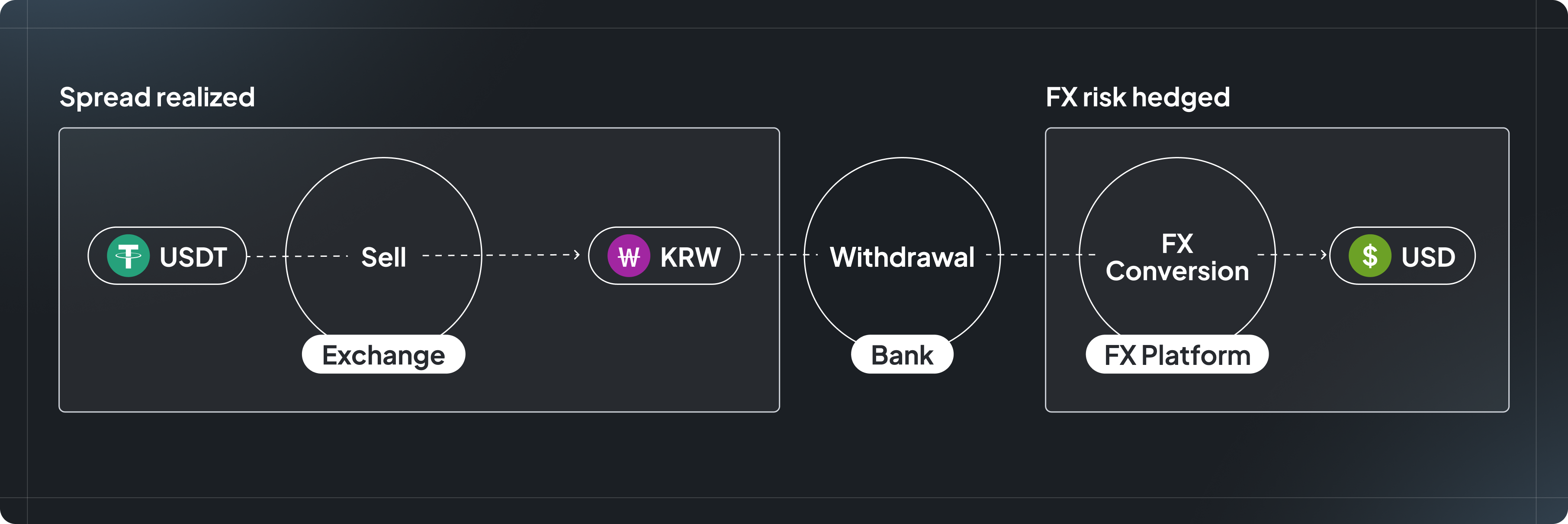
The domestic USDT price is overvalued vs. global markets. The protocol sells USDT to realize the spread and hedges KRW/USD FX risk during the KRW-holding window.
**Flow (Spot/Fiat-based Hedge)**
* Sell USDT → KRW on a Korean exchange (spread realized).
* Withdraw KRW to the exchange-linked bank account.
* Remit KRW to the FX-hedging platform.
* Convert KRW → USD on the platform and hold (FX risk hedged).
**Flow (Futures-based Hedge)**
* Sell USDT → KRW on a Korean exchange (spread realized).
* On a global futures venue, open an offsetting KRW short of equal notional (with N× leverage, as applicable).
#### 2) When the Premium Is Low
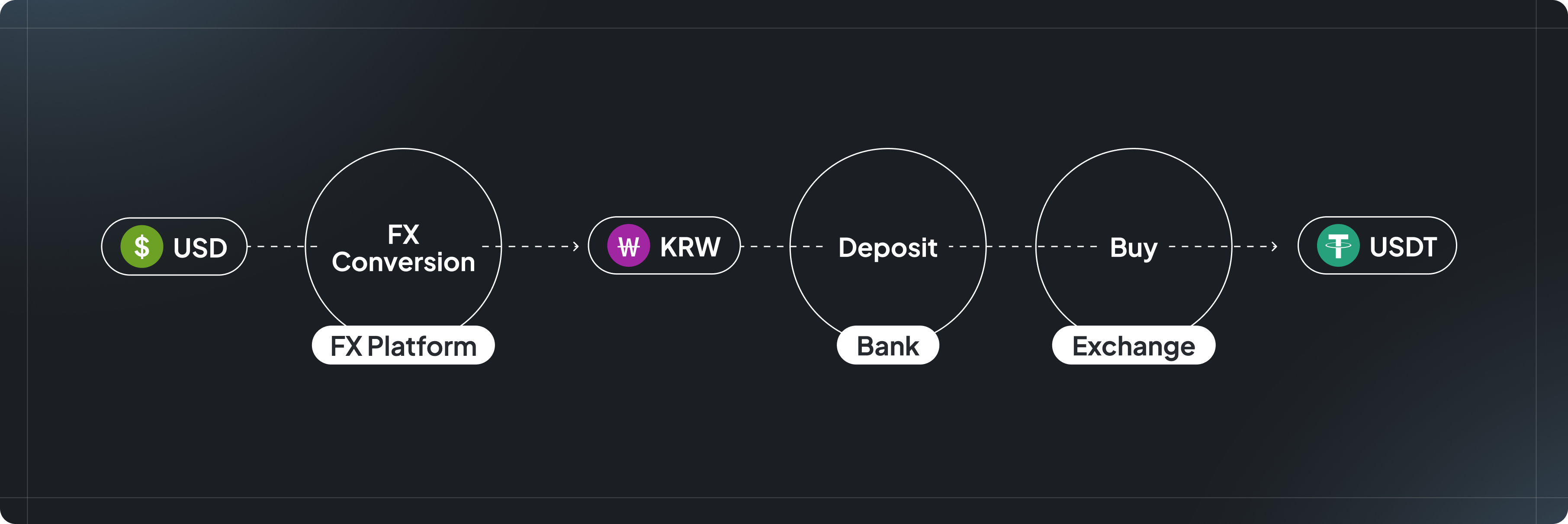
The domestic USDT price is undervalued vs. global markets. The protocol uses KRW to accumulate USDT, positioning for future sell opportunities when the premium widens.
**Flow (Spot/Fiat-based Hedge)**
* On the FX-hedging platform, convert USD → KRW.
* Remit the converted KRW to a bank account, then deposit to the exchange.
* Buy USDT with KRW and hold (for future sale).
**Flow (Futures-based Hedge)**
* Buy USDT with KRW on the exchange.
* On the global futures venue, close the existing KRW short.